
Online Marketplace vs Your Own Booking Page: Which Grows Your Business?
Marketplaces sell you access to demand, with fees and customer-contact rules that vary by platform. Your own booking page keeps the relationship and the margin. A practical split for service businesses.
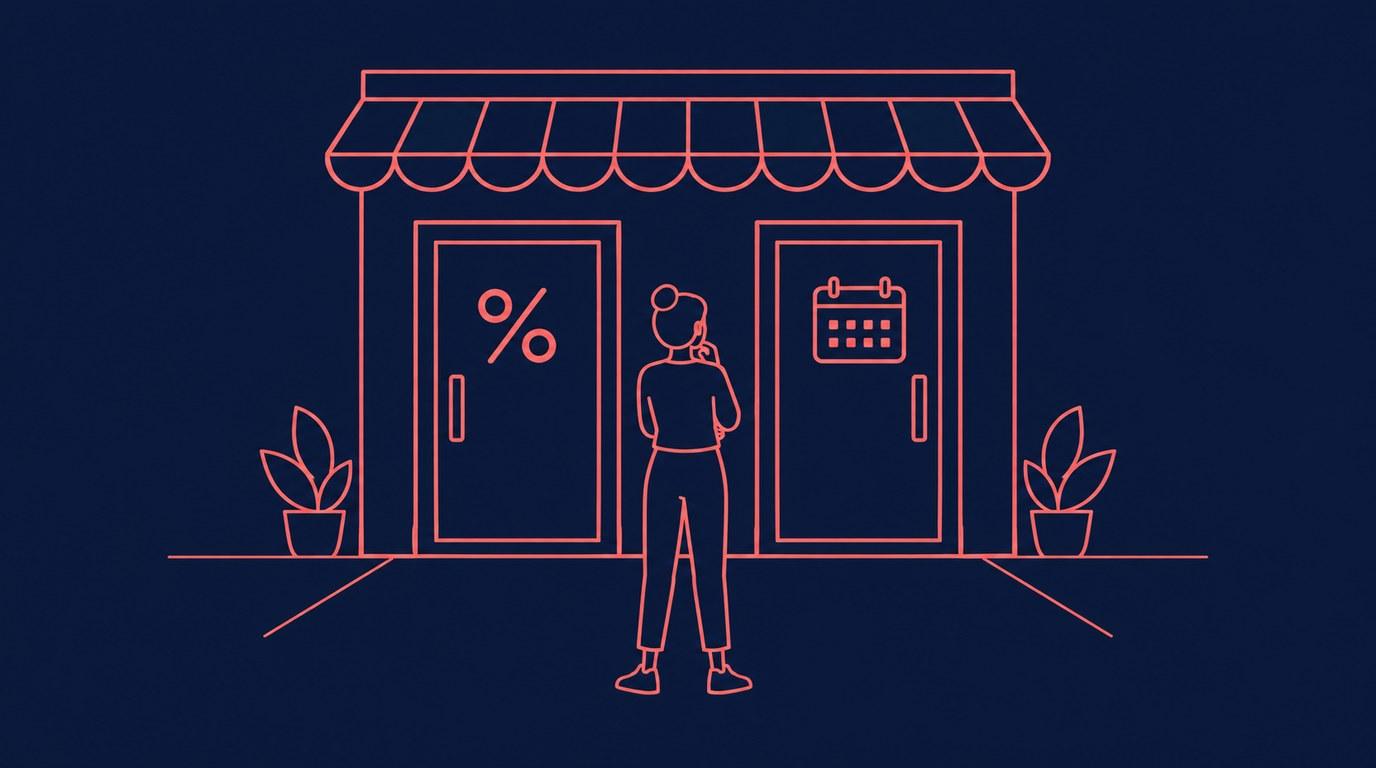
A home-services professional lists on a big marketplace and gets steady jobs. Most jobs carry a fee, a percentage on some platforms, a charge per lead on others, the booking happens inside the platform's experience, and a cheaper competitor sits one scroll away. Meanwhile, her repeat clients would happily book her directly if there were an easy way. This is the real choice most service businesses face: rent demand from a marketplace, or build a booking channel you own.
The honest answer is that most businesses need both at different stages. Here is how to think about the split.
What a marketplace actually sells you
A marketplace sells you access to people who are already searching. That is genuinely valuable when you are new and unknown. The trade-offs are structural, not personal: the platform sets the fees, usually a percentage of each job or a charge per lead, and it controls the booking experience. On many platforms the customer relationship stays inside the marketplace too; the exact rules on fees and customer contact vary by platform and change over time, so read the current terms of any marketplace you list on. The platform's incentive is to keep the customer browsing providers, not loyal to you.
Notice what happens to your repeat customers. A client who already trusts you still has to book through the platform, and on a commission-based marketplace the platform still takes its cut on work you won yourself.
What your own booking page gives you
Your own booking page inverts the economics. A tool like Onbookr charges a flat monthly subscription and no commission, and payments go straight to your own Stripe, PayPal, or Razorpay account. A client who books you for the tenth time costs you the same as the platform fee you already pay: nothing extra per booking.
You also control the relationship directly. The booking confirmation, the reminder, and the reschedule link all come from your business, not a marketplace brand.
The marketplace profile vs the booking page
A marketplace listing is built for comparison shopping. Your booking page is built for people who already chose you. That is why the page works hardest in the places your existing audience lives: the link in your Instagram bio, your WhatsApp status, your Google Business Profile, the QR code on your van or your studio wall. Onbookr includes a QR code generator you can download for print, so the move from "I know her work" to "booked for Thursday" takes a minute.
A practical split that works
Keep the marketplace for cold demand, and move every warm relationship to your own page. When a marketplace job finishes well, the client already has your number; make sure what they find there is a booking page, not a request to message you for availability. Over a year, the share of your income that pays platform fees shrinks without you turning off the new-customer tap.
Set your own page up to be the easier path: clear services with prices, your real availability, automatic confirmations and reminders, and self-serve rescheduling up to 24 hours before the appointment. When booking direct is easier than booking through an app, clients stop asking why they should.
The goal is not to quit marketplaces on principle. It is to stop paying platform fees on customers who were already yours.